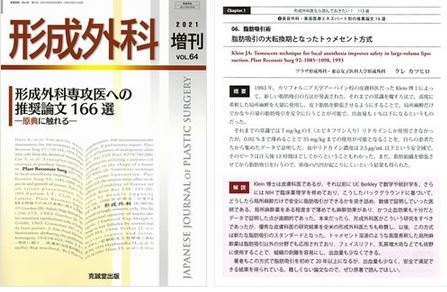
Partial liposuction with local anesthesia

At our clinic, we use a method called “partial” liposuction. This is a method of treating only the lower abdomen with a small amount of local anesthesia for patients who are concerned about abdominal fat. This way you can safely go on a day trip without much pain. The following areas, such as the upper abdomen and flanks, can be treated on a day trip at intervals of 2-3 weeks or more.

The essential liposuction technique is to use a diluted anesthetic solution called Tumecent, which was developed in the United States, and then use a thin suction machine called a microcannula made in the United States to perform liposuction. By doing this, you can expect a quick recovery with less damage to the tissue. Our American board-certified plastic surgeons have a proven track record of doing many liposuctions in this way over the past 20 years.

Botox at Plaza Plastic Surgery: 1 week warranty with a highly experienced US specialist.

Our doctor is an US board-certified plastic surgeon who has treated many people of all races for over 20 years. In addition, our clinic offers a one-week warranty, and for the treatment of wrinkles on the forehead, glabellar (frown lines), and crow’s feet (outer corners of the eyes), additional treatment after one week is free.

In addition, for Botox treatment of parts other than the above, it is also applied to jaw like muscles (thinning, improvement of clenching), stiff shoulders, migraine, hyperhidrosis (armpit, limbs).

Medical Laser Hair Removal: Why do you need two types of lasers, YAG and Diode?

There are various types of hair removal lasers, but at our clinic, we have a model called Quattro and a model called Desire from Luminous Inc., which have received the oen of the highest evaluation overseas, and we treat with both YAG and Diode lasers.

The YAG laser is a laser with a wavelength range of 1060 nm, while the diode has a wavelength of 805 nm. Diodes perform very effective hair removal on Caucasian and Asian skin types. Yags work deeper into the skin than diodes. This means, for example, that it also reaches the part of the hair stem cells called the bulge area. In addition, YAG LASER can effectively remove hair by minimizing damage to the skin even when the skin is dark.

This means that with both yag and diode lasers, medical laser hair removal for all skin types of patients can be done safely and effectively.

State of art laser hair machine has arrived

Introducing the Luminous Quattro from Lummenis, inc. is the latest hair removal laser approved by the Ministry of Health, Labor and Welfare of Japan. It is equipped with both an 805nm diode and a 1060nm YAG laser. Therefore, it is compatible with almost all skin types.

We have been using the Lumines Lightshheer laser for many years, but after that we introduced the more advanced Lumines Desire, and now we are introducing the latest model Quattro. In this way, we have introduced the best laser equipment in the world standard, but on the contrary, we have lowered the treatment price of laser hair removal.

Please take this opportunity to try the world’s best laser hair removal equipment.

Breast lift under local anesthesia

Breast sagging can be natural, but it can also occur after breastfeeding. Usually, these drooping breasts are operated on both sides at the same time under general anesthesia, but there are cases where people do not want to receive general anesthesia or want to perform under local anesthesia for other reasons.

In our clinic, the treatment of drooping breast can be done under local anesthesia. In that case, due to the limited amount of anesthetic, surgery is performed on each side. Since it is a one-day surgery, you can go home immediately after the surgery.

Surgery for a ptosic (sagging) breast involves removing the skin around the areola, as well as removing the lower part of skin and adipose tissue, depending on the degree of ptosis. In some cases, liposuction is also used (in breasts with high fat content).

Diagnosis and treatment of gynecomastia at our clinic:

In addition to the physical examination including palpation, we also perform MRI examinations at a third-party institution for patients who come to our clinic complaining of symptoms such as gynecomastia. Palpation alone may not tell whether gynecomastia-like breast ridges are due to a subareolar mass, a fibrous component, or fat buildup. An MRI scan will tell you these things fairly accurately and can be diagnosed by an independent radiologist.

If the MRI results show true gynecomastia, treatment is possible within the scope of the Japanese national insurance coverage. Conversely, if a diagnosis of pseudogynecomastia is made due to findings such as a large amount of adipose tissue, adipose tissue aspiration is indicated instead of resection, which is a free practice (no insurance coverage).

Next, even if the tumor is removed by subareolar incision in insurance medical treatment, at our clinic, by removing the surrounding adipose tissue to some extent at the same time, a steep step with the excised part of the tumor is eliminated, and more complete hemostasis is performed. We believe that we can get the better results this way. This method is also commonly done in the United States.

At our clinic, in cases where surgical treatment is performed under the diagnosis of gynecomastia, the excised tissue is submitted to an external pathological examination, and the pathological diagnosis report is given to the patient.

Diagnosis and treatment of gynecomastia requires a scientific approach tailored to each individual patient, and our clinic diagnoses and treats with the above protocol.

Facelift at hospital setting

The director of our clinic sometimes operates at university hospitals. The other day, face lift surgery was performed under general anesthesia, and he participated in it. Surgery at a university hospital has a team medical system, and 3-4 plastic surgeons perform facelift surgery as a team. Surgery that takes about 4 hours to perform alone can be safely and effectively performed in 2 to 3 hours, and good results can be expected from the viewpoint of anesthesia management.

There are various surgical methods for face lift, but under general anesthesia, you can also pull the fascial tissue called deep SMAS. The director of this clinic can perform face lift even under local anesthesia, in which case one-day surgery is also possible, but it is rather a mini lift.

In this way, at our hospital, it is possible to operate the face lift in the hospital or outpatient department according to the needs of the patient.

Surgery at the university hospital

A few weeks ago, we performed a major surgery at a university hospital where the director is an adjunct assistant professor. This case was done by removing the capsule and replacing the breast augmentation bag, especially in cases where encapsulation occurred in past breast augmentation surgery and was accompanied by severe contracture of the third degree.

Removing the thick capsules from past breast augmentation surgery can be a daunting task. To remove the capsule cleanly, it is necessary to carefully peel off the capsule while repeating delicate removal and hemostasis by a plastic surgeon.

These surgeries were performed with the participation of four specialists on the day of the operation with a team medical system in place. The breast augmentation bag could be replaced with a large one over 400cc, and the patients were very satisfied.

For complicated cases as above, we perform surgeries in the university hospital.

Prominent Ear

Prominent Ear (standing ear) is not just standing ears, but also have weak or no bends like the streaks that should be in the middle of ear, and even when the entire ear is far away from the skull. , There are various cases. Therefore, it is necessary to select an accurate diagnosis and the most suitable treatment method for each case. Our doctors have been involved in many standing ear treatments for over 20 years and can meet those needs.

In addition, even if you have been treated at another hospital in the past, but it has recurred or did not go well, we will respond flexibly.

The procedure is often covered by the national health insurance.

For further details, please visit this page.

Posted in Ear

Types of Mesotherapy

There are two types of typical mesotherapy (lipolytic injection) agents, one is Phosphatidyylcholine (PC for short), which has been known for a long time, and the other is deoxycholic acid, whose efficacy has been attracting attention in recent years. The latter comes with a salt form (Sodium Deoxycholate: DC for short) and also known for the ingredient for the famous Kybella.

At our clinic, we prepare both of the above medicines and recommend the optimal treatment method while analyzing the state of fat accumulation in each patient.

Removing the breast implants and the capsular contracture

The other day, we performed the removal surgery of the breast augmentation bag and the capsules for a patient who complained of pain in the neck and upper arm due to the encapsulation of the breast augmentation bag that the patient had in the past. This type of operation required careful removal of the capsules around the bag, so the operation was performed under general anesthesia after the patient was admitted to a university hospital.

Breast augmentation bags that were placed in the past can cause progressive encapsulation of the area (called capsular contracture), causing pain and chest deformity, as well as sometimes lymphoma. Please refer to this page for more details.

If you are considering removing the breast augmentation bag, please feel free to contact “Plaza Plastic Surgery”, which has 18 years of experience in the United States.

Mesotherapy – Fat Dissolving Injection

Mesotherapy is a cosmetic surgery procedure in which the use of chemical substances and plants (phytochemicals) are injected into the subcutaneous layer of the skin. This substance is injected at very small doses, so as not to cause any major negative side effects. The aim of the procedure is to stimulate the production of collagen and elastin in order to eliminate skin wrinkles, bags, sun-spots, sagging and stretch marks.

Mesotherapy is a less invasive procedure than Liposuction. However, both of these procedures are highly effective. Liposuction, in contrast, does not require an incision because the skin is removed through incisions, but this procedure is risky because of the amount of fluid and the depth of the incision. With Mesotherapy, the injection of substances and herbs into the fat under the skin causes it to break down and then be removed from the body by the lymphatic system.

Liposuction is the first surgical procedure for removal of fat. This procedure may be performed on the entire body or on specific areas of the body. It is generally more invasive than Mesotherapy, as it requires the use of general anesthesia. It is also not covered by any insurance plan. In fact, a large percentage of patients seeking treatment for cellulite will undergo Liposuction as well.

Mesotherapy is generally considered safer than Liposuction, although there are some risks associated with the use of chemicals in this procedure. There are several risk factors associated with Mesotherapy:

Mesotherapy can be a little painful for some patients, although patients experience no pain during the procedure. During a mesotherapy session, the doctor will inject substances directly into the body to target the fat that is present under the skin. The process of injecting the substances into the body allows them to be absorbed by the body quickly and efficiently. However, patients should always consult with their doctors before having any type of procedure done.

Minor side effects are rare but can include itching, bruising, nausea, vomiting, diarrhea, fever, redness and burning after a Mesotheraphycal injection. A few patients may also experience a change in bowel habits, but these should improve after a couple of days and usually clear up within a week. In more serious cases, patients may suffer from severe side effects.

Because it targets fat, Mesotherapy can sometimes cause damage to other tissues. The damage to the tissue could be permanent. The most common complication to mesotherapy is the formation of scar tissue.

Although Mesotherapy is a relatively new treatment, it has many serious complications that can be quite serious. The main complication associated with Mesotherapy is the risk of infection. This can occur when the skin around the incision becomes inflamed and irritated, making it difficult to heal.

Before surgery can begin, the surgeon will need to take a look at your medical history. This information will help the doctor determine if you are a good candidate for surgery. mesotherapy.

Patients who are obese, have high cholesterol, have diabetes, heart disease, or other health conditions should not have surgery. Mesotherapy can also not be recommended for patients who have a history of cancer. and should not be used in patients who are pregnant. or lactating.

Mesotherapy can also be performed on patients who are suffering from a form of skin cancer, though it is not usually recommended for patients who are pregnant or lactating. There is a chance that some forms of Mesotherapy might be harmful to the unborn baby. If you are a smoker, there is a chance that you could develop lung cancer or an irregular heartbeat during your Mesotherapy sessions. If you have an underlying disease, such as diabetes, kidney disease or heart disease, you should avoid mesotherapy. You should also avoid mesotherapy if you smoke.

Mesotherapy is not recommended for patients who are not seeking to reduce cellulite, because it can not effectively treat the cellulite for cosmetic purposes. In general, mesotherapy should be avoided for people who are looking for fast results. Mesotherapy can also not be used to remove excessive fat from one area of the body.